PLAN YOUR TREK · FITNESS & PACKING
How hard is a gorilla trek, who can go, and what should you bring? Here's how to prepare.
Quick answer: treks last 1 to 6 hours or more on steep, muddy forest trails at altitude. A moderate level of fitness is enough for most people, especially with a porter. The minimum age is 15 for gorillas and 12 for golden monkeys.

Mountain gorillas live in forests between roughly 6,500 and 13,000 feet (2,000 and 4,000 meters) above sea level. Treks can be steep, slippery and through thick vegetation, and the length depends on where your gorilla family is that day. If you can comfortably walk for a few hours on hills, you'll be fine. Regular walks, stair climbing or hiking in the months before your trip will make it more enjoyable.
Rwanda's treks are generally gentler than Uganda's Bwindi. If mobility is a concern, tell us and we'll ask the rangers to assign you to one of the closer, easier families.
Weeks 1 and 2: walk for 30 to 45 minutes, three or four times a week.
Weeks 3 and 4: add hills or stairs, plus one longer walk of about 90 minutes at the weekend.
Weeks 5 and 6: hike for 2 to 3 hours on uneven ground, wearing the boots and daypack you'll trek in.
Weeks 7 and 8: keep up two or three hill sessions a week and one long hike, then ease off in the last few days before you fly.
Squats, lunges and step-ups strengthen your legs for steep, muddy descents. If you have a medical condition, check with your doctor before you start.
Mountain gorillas live between roughly 6,500 and 13,000 feet (2,000 and 4,000 meters) above sea level. Most trekkers notice they're breathing harder on climbs, but serious altitude sickness is rare at these heights. Walk at a steady pace, drink plenty of water and tell your guide if you feel unwell. Rwanda's Volcanoes National Park sits higher than much of Bwindi, although its trails are generally gentler.
✓ Minimum age for gorilla trekking: 15 years
✓ Minimum age for golden monkey trekking: 12 years
✓ There is no upper age limit; many of our travelers trek in their 60s and 70s
Gorillas can catch human illnesses, so you may not be allowed to trek if you have a cold, flu or other contagious illness. Visitors keep about 23 feet (7 meters) from the gorillas, and groups are limited to 8 people per family for one hour.
Yes, we highly recommend it. Porters cost about US$20 per day plus a tip. They carry your daypack, help you on steep or muddy sections, and the income supports families living near the parks. You'll also be given a sturdy wooden walking stick, which is better than folding hiking poles in the forest.
✓ Waterproof hiking boots, worn in
✓ Long pants in neutral colors
✓ Long-sleeved shirt
✓ Waterproof jacket and rain pants
✓ Gardening gloves for grabbing vegetation
✓ Long socks to tuck pants into
✓ Hat
✓ Small daypack with rain cover
✓ 2 quarts (2 liters) of water and snacks
✓ Packed lunch (provided by your lodge)
✓ Camera or phone (no flash)
✓ Insect repellent and sunscreen
✓ Small USD notes for porters and tips
✓ Passport and permit (we'll remind you)
Your day starts early with a ranger briefing at park headquarters around 7 to 8 am. Rangers assign groups to gorilla families, then you drive to the trailhead and begin trekking with your guide, armed rangers and porters. Trackers who went ahead at dawn radio the gorillas' location. Once you find them, you'll spend one magical hour watching them feed, play and rest before trekking back.
Gorilla trekking is possible for many travelers with limited mobility. Rangers can assign you to a family that usually stays closer to the trailhead, porters can help you over steep sections, and some parks may offer a carried-chair service for travelers who can't walk the trail. Tell us about your needs when you book so we can choose the right park and family. Our gorilla trekking FAQ answers more questions about who can go.
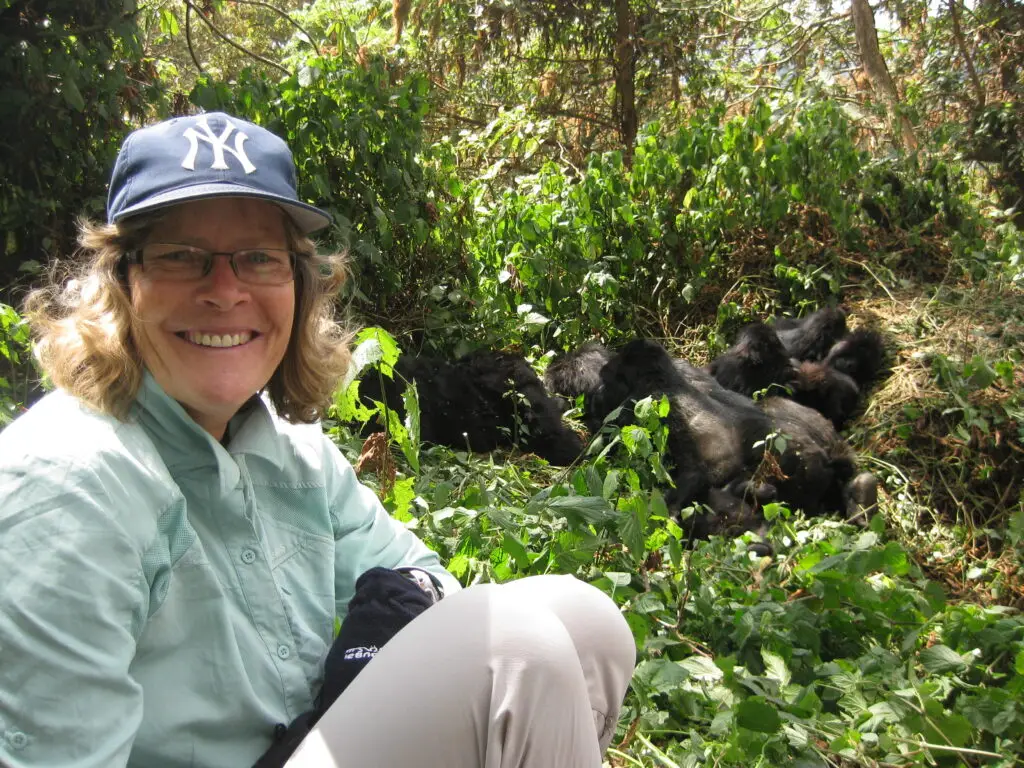
Flash photography isn't allowed and the forest is shady, so a camera that handles low light well makes the biggest difference. A zoom lens of around 24–200mm covers most situations, as you'll be about 23 feet (7 meters) from the gorillas. Bring a spare battery and memory card, a rain cover or dry bag, and keep your phone handy for close-range shots. Then put the camera down for a few minutes and simply watch.
✗ Drones: flying one in Uganda's or Rwanda's national parks needs special permission, so leave it at home
✗ Plastic bags: they're banned in Rwanda and can be confiscated on arrival
✗ Bright colors: neutral greens, browns and khaki blend into the forest
✗ Snacks near the gorillas: eat before or after your hour, never in sight of the gorillas
Waterproof hiking boots with good grip are best. Trails are often steep and muddy, and ankle support helps on slippery descents. Wear them in before your trip.
Walking sticks are handed out at the trailhead and porters are available to hire, but boots and rain gear are hard to find locally, so bring your own.
Long pants tucked into long socks, a long-sleeved shirt, a waterproof jacket and gardening gloves. Choose neutral colors and layers you can take off as you warm up. Our guide to the best time for gorilla trekking covers what to expect in each season, and gorilla permits and cost explains what your permit covers.
Park rules are set by the Uganda Wildlife Authority and the Rwanda Development Board and can change. Correct as of October 2026.
Tell us about your group and we'll suggest the best trek and gorilla family for you.
Inquire now