PLAN YOUR TREK · UGANDA VS RWANDA
Both countries offer unforgettable encounters with mountain gorillas. Here's how they compare so you can choose the right one, or combine both.
Quick answer: choose Uganda for better value, more gorilla families and the chance to add chimps and safari. Choose Rwanda for a short trip, easier access from Kigali, gentler treks and luxury lodges.
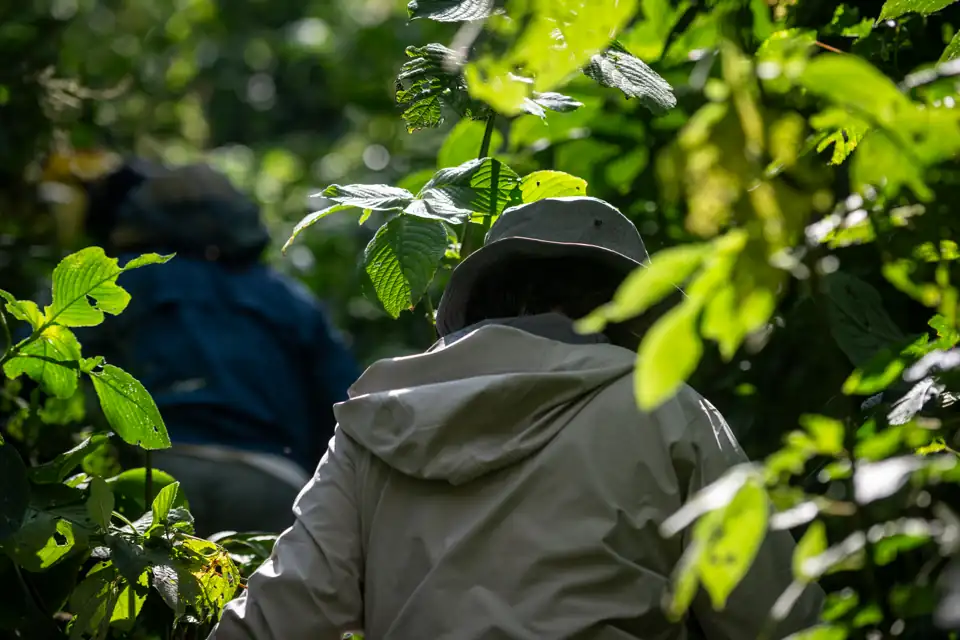
Uganda: US$800 (US$600 in April, May and November in 2026 and 2027).
Rwanda: US$1,500.
Uganda: Bwindi Impenetrable National Park and Mgahinga Gorilla National Park, home to more than half of the world's mountain gorillas.
Rwanda: Volcanoes National Park, where Dian Fossey worked, with 12 habituated families.
Uganda: southern Bwindi is a 4–6 hour drive from Kigali, or fly domestically from Entebbe.
Rwanda: Volcanoes is about 3 hours by road from Kigali airport.
Uganda: Bwindi's steep, dense forest makes treks more challenging; 1–6 hours or more.
Rwanda: generally gentler slopes and bamboo forest, though treks still vary.
Uganda: a wide range from comfortable lakeside resorts to luxury lodges.
Rwanda: a strong concentration of high-end lodges near the park.
Uganda: golden monkeys, chimpanzees in Kibale and Kyambura, savannah safari in Queen Elizabeth National Park and Lake Mutanda.
Rwanda: golden monkeys, the Dian Fossey Gorilla Fund campus, Kigali's culture and history, and Lake Kivu.
The right country depends on three things: your budget, how much time you have, and how hard you want to work for your hour with the gorillas.
✓ Want the best value: permits cost US$800, about half the price of Rwanda's
✓ Have a week or more to travel
✓ Want the widest choice of gorilla families and permit dates
✓ Enjoy a wilder, more challenging trek
✓ Want to add chimpanzees, golden monkeys or a savannah safari

✓ Are short on time: Volcanoes National Park is about 3 hours from Kigali airport
✓ Prefer generally gentler trails
✓ Want to stay in one of Africa's finest luxury lodges
✓ Would like to visit the Dian Fossey Gorilla Fund campus
✓ Want to add Kigali's culture and history, or Lake Kivu

The permit is the biggest difference. A Uganda permit costs US$800 (US$600 in April, May and November in 2026 and 2027), while Rwanda's costs US$1,500. Lodges near Rwanda's Volcanoes National Park also lean toward the top end. Our Gorillas Uganda trek starts from US$3,000 per person for 6 days, and our Gorillas Rwanda trek from US$5,400 per person for 5 luxury days, both with permits included. Our guide to gorilla permits and cost breaks down the rest of the budget.
Yes, and it's an easy combination. Kigali is the closest international airport to Mgahinga and southern Bwindi, so many travelers fly into Rwanda and cross into Uganda by road, which is exactly how our Gorillas Uganda trek works. You can add a trek in Rwanda's Volcanoes National Park to the same trip, and each trek visits a different gorilla family, so no two encounters are the same.
In Bwindi's Rushaga sector, Uganda offers the Gorilla Habituation Experience: up to four hours with a gorilla family that researchers are still getting used to people. It costs US$1,500 per person and places are very limited. Rwanda has no equivalent, so if a longer encounter matters to you, Uganda is the clear choice.
The East Africa Tourist Visa costs US$100 and covers Uganda, Rwanda and Kenya for 90 days with multiple entries, as long as you stay within those three countries. Apply through the country you enter first.
Uganda announced in October 2026 that a yellow fever certificate is no longer required for entry, although vaccination is still recommended. Rwanda asks for a certificate only if you arrive from a country with yellow fever risk. Check the latest rules with your doctor or travel clinic before you go.
Usually Uganda. Bwindi's forest is steep and dense, while Rwanda's Volcanoes National Park has generally gentler slopes through bamboo. Every trek varies, though, because it depends on where your gorilla family is that day.

Uganda. Bwindi and Mgahinga are home to around half of the world's mountain gorillas, with more than 20 habituated families. Rwanda's Volcanoes National Park has about a dozen habituated families.
Yes. Uganda's permits cost about half as much as Rwanda's, and they drop to US$600 in April, May and November in 2026 and 2027.
Allow at least 3 to 4 days for a Rwanda gorilla trek, and 5 to 7 days for Uganda, where the drive to the parks is longer and there's more to add on.
If budget matters or you want a longer adventure, Uganda offers outstanding value. If you're short on time or prefer comfort and easier treks, Rwanda is ideal. Many travelers fly into Kigali and cross into Uganda, which is exactly how our Gorillas Uganda trek works, so you can enjoy the best of both.
Permit and visa details are set by UWA, RDB and each country's immigration authority, and can change. Correct as of October 2026.
Tell us your dates, budget and fitness and we'll recommend the best fit.
Inquire now